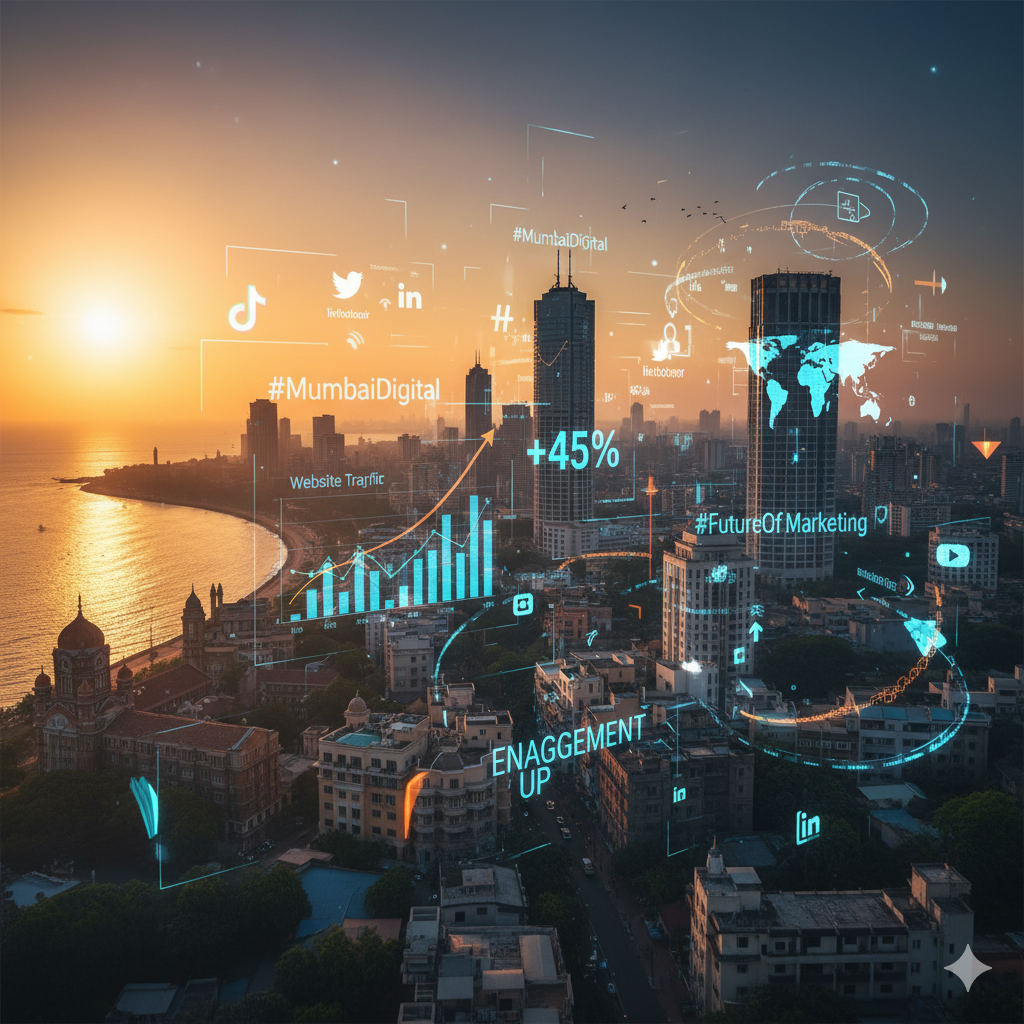
Mumbai, the city that never sleeps, is a vibrant tapestry of commerce, culture, and relentless ambition. As India’s financial capital and a major economic hub, it has always been at the forefront of innovation. In recent years, this dynamism has extended emphatically into the digital realm, transforming how businesses connect with their audiences. The future of digital marketing in Mumbai isn’t just about adapting to change; it’s about leading it, shaping a landscape that is as diverse and energetic as the city itself.
The Current Landscape: A Digital Melting Pot
To understand the future, we must first appreciate the present. Mumbai’s digital marketing scene is a bustling ecosystem, characterized by:
- High Internet Penetration: With widespread smartphone adoption and affordable data, Mumbaikars are constantly online, consuming content, shopping, and interacting. This provides a fertile ground for digital marketers.
- Diverse Consumer Base: From the high-net-worth individuals of South Mumbai to the aspirational middle class in the suburbs and the vibrant street vendors, Mumbai’s population is incredibly varied. This necessitates nuanced, targeted digital strategies.
- Thriving Startup Culture: Mumbai is a hotbed for startups, many of whom are digital-native businesses. These agile companies are quick to adopt new marketing technologies and strategies, pushing the boundaries of what’s possible.
- Presence of Major Brands: Both Indian conglomerates and multinational corporations have a significant presence here, driving large-scale digital campaigns and setting industry benchmarks.
- Growth of E-commerce and Online Services: From food delivery to online education, e-commerce has boomed in Mumbai, making digital touchpoints critical for customer acquisition and retention.
However, the current landscape also presents challenges. The sheer volume of digital noise means brands need to cut through clutter with increasingly sophisticated and personalized messaging. The competitive nature of the market demands continuous innovation and an acute understanding of local nuances.
Key Trends Shaping Mumbai’s Digital Marketing Future
The future isn’t a singular point but a confluence of emerging trends. In Mumbai, several key drivers will redefine digital marketing:
1. Hyper-Personalization and AI-Driven Experiences:
The days of generic marketing messages are rapidly fading. Mumbaikars expect experiences tailored to their individual preferences, past interactions, and real-time behavior. Artificial Intelligence (AI) will be the engine behind this hyper-personalization.
- Predictive Analytics: AI will analyze vast datasets to predict consumer behavior, allowing marketers to anticipate needs and offer relevant products or content before a customer even searches for them.
- Dynamic Content Creation: Imagine websites and ads that dynamically change their content based on who is viewing them, reflecting their interests, location, and even mood.
- AI-Powered Chatbots and Virtual Assistants: These tools will evolve beyond basic FAQs to offer sophisticated, empathetic customer service, guiding users through complex queries and even assisting with purchases. This is particularly crucial in a city where instant gratification and efficient service are highly valued.
- Personalized Product Recommendations: E-commerce platforms will leverage AI to offer highly accurate product suggestions, enhancing the shopping experience.
2. The Rise of Vernacular and Hyper-Local Content:
While English holds sway in corporate circles, the heart of Mumbai beats in Marathi, Hindi, and a blend of other regional languages. Digital marketing will increasingly pivot towards vernacular content to truly connect with the masses.
- Localized SEO: Optimizing content for regional language search queries will become paramount.
- Vernacular Social Media Campaigns: Engaging with communities in their native tongue fosters stronger connections and trust.
- Hyper-Local Targeting: Leveraging geo-location data, marketers will deliver messages specific to neighborhoods, local events, and community-specific needs. Imagine an ad for a local Ganpati pandal tailor-made for residents of that specific locality.
- Voice Search Optimization in Regional Languages: As voice assistants become more sophisticated in understanding Indian languages, optimizing for voice search queries in Marathi or Hindi will be crucial.
3. Immersive Experiences: AR, VR, and the Metaverse:
The line between the physical and digital world is blurring, and Mumbai’s digital marketers will embrace immersive technologies to create unforgettable brand experiences.
- Augmented Reality (AR) for Product Trials: Imagine trying on clothes virtually or placing furniture in your living room using your smartphone camera before making a purchase. This reduces returns and enhances confidence.
- Virtual Reality (VR) for Brand Storytelling: Brands could create VR experiences that transport customers to their manufacturing facilities, behind-the-scenes events, or even fantastical brand worlds.
- Early Forays into the Metaverse: While still nascent, brands will start exploring the metaverse as a new frontier for engagement, setting up virtual stores, hosting events, or creating digital brand assets. Think of a virtual walk-through of a new real estate project, or a fashion show in a digital realm.
- Interactive Ad Formats: Ads will become more than just banners; they will be interactive experiences that capture attention.
4. Data Privacy and Trust as a Core Value Proposition:
As digital footprints grow, so do concerns about data privacy. Mumbai’s consumers, like their global counterparts, are becoming more aware and protective of their personal information.
- Transparent Data Practices: Brands that are open about how they collect and use data will build greater trust.
- Consent Management: Clear and user-friendly consent mechanisms will be essential.
- Focus on First-Party Data: Reducing reliance on third-party cookies and building robust first-party data strategies will be critical for effective targeting while respecting privacy.
- Ethical AI Use: Ensuring AI is used responsibly and ethically, without perpetuating biases, will be a significant challenge and opportunity. Trust will become a major differentiator in a crowded market.
5. The Creator Economy and Influencer Marketing Evolution:
Influencer marketing has already taken Mumbai by storm, but its future will see significant evolution.
- Micro and Nano-Influencers: Brands will increasingly collaborate with smaller, niche influencers who have highly engaged and authentic communities, offering better ROI than macro-influencers.
- Long-Term Partnerships: Moving beyond one-off campaigns, brands will seek long-term relationships with creators who genuinely align with their values.
- Authenticity Over Aspiration: Consumers are savvier and seek genuine connections. Influencers who are authentic and relatable will thrive.
- Video-First Content: Short-form video platforms like Instagram Reels and YouTube Shorts will continue to dominate, making video content creation skills indispensable.
- Brand as a Creator: Brands themselves will act more like creators, producing engaging, story-driven content rather than just promotional material.
6. Sustainable and Ethical Marketing:
As environmental and social consciousness grows, Mumbaikars are increasingly aligning with brands that demonstrate a commitment to sustainability and ethical practices.
- Green Marketing: Promoting eco-friendly products and sustainable business practices will resonate with a growing segment of consumers.
- Social Responsibility Campaigns: Brands will integrate social causes into their marketing efforts, showcasing their positive impact on society.
- Transparent Supply Chains: Consumers will demand to know the origins of products and the ethical standards of their production.
- Authentic Storytelling: Avoid “greenwashing” – genuine commitment to sustainability will be key, backed by transparent communication.
7. The Integration of Online and Offline (O2O) Experiences:
Despite the digital surge, physical touchpoints remain crucial in Mumbai. The future lies in seamlessly integrating online and offline experiences.
- Click-and-Collect Models: Allowing customers to purchase online and pick up in-store offers convenience and drives foot traffic.
- In-Store Digital Experiences: QR codes for product information, interactive screens, and AR mirrors can enhance the physical shopping journey.
- Location-Based Marketing: Leveraging geo-fencing and beacons to send targeted offers to customers near physical stores.
- Events and Experiential Marketing: Combining digital promotion with engaging physical events will create memorable brand interactions. Think of a product launch that blends a metaverse experience with a physical pop-up store in a high-traffic Mumbai mall.
8. Web3 and Decentralized Marketing:
While still in its early stages, the underlying principles of Web3 – decentralization, transparency, and user ownership – could fundamentally alter digital marketing.
- NFTs for Brand Loyalty: Non-Fungible Tokens could be used as loyalty rewards, exclusive access passes, or digital collectibles, fostering deeper brand engagement.
- Decentralized Autonomous Organizations (DAOs) for Community Building: Brands might explore DAOs to give their most loyal customers a say in product development or marketing initiatives.
- Blockchain for Transparency: Blockchain technology could offer unprecedented transparency in advertising supply chains, combating ad fraud and ensuring fair compensation.
- Data Ownership: Users could potentially have more control over their data, leading to new models of permission-based marketing.
Challenges on the Horizon
While the future is bright, several challenges will need to be addressed:
- Digital Divide: Despite high penetration, pockets of the population still lack adequate digital access or literacy. Inclusive strategies will be important.
- Talent Gap: The rapid evolution of digital marketing demands a highly skilled workforce. Mumbai will need to continually invest in training and upskilling its talent pool.
- Infrastructure Limitations: While improving, stable and high-speed internet connectivity can still be an issue in certain areas, impacting the delivery of rich digital experiences.
- Regulatory Frameworks: As digital marketing evolves, new regulations around data privacy, AI ethics, and advertising standards will emerge, requiring constant adaptation.
- Information Overload and Ad Fatigue: Mumbaikars are constantly bombarded with information. Cutting through the noise requires increasingly creative, valuable, and non-intrusive marketing.
The Role of Technology and Data Science
At the core of Mumbai’s digital marketing future lies sophisticated technology and robust data science.
- Marketing Automation Platforms: These will become even more integral for streamlining campaigns, managing customer journeys, and scaling efforts.
- Customer Relationship Management (CRM) Systems: Advanced CRMs will provide a unified view of customer interactions across all touchpoints, enabling truly personalized experiences.
- Analytics and Business Intelligence Tools: Marketers will rely heavily on advanced analytics to derive actionable insights from vast datasets, optimizing campaigns in real-time.
- AI and Machine Learning Tools: Beyond personalization, these tools will assist in content creation (e.g., AI-generated ad copy or video snippets), predictive forecasting, and fraud detection.
Education and Skill Development
The dynamic nature of digital marketing means continuous learning is not just an advantage, but a necessity. Mumbai’s educational institutions and training providers will play a crucial role in preparing the next generation of digital marketers.
- Specialized Courses: Programs focusing on AI in marketing, data analytics, metaverse marketing, and ethical AI will be in high demand.
- Practical, Hands-on Training: Emphasizing real-world projects and case studies will be vital.
- Industry-Academia Collaboration: Stronger ties between businesses and educational bodies will ensure that curricula remain relevant to industry needs.
- Upskilling Current Professionals: Continuous professional development programs will be essential for existing marketers to stay ahead of the curve.